

Alcohol Addiction Help: What Meaningful Support Looks Like Today
If you've found yourself reading this article, you may already be questioning your relationship with alcohol — and whether it's time to seek alcohol addiction help.
Whether it's fear of judgment, uncertainty about the rehab process, or the belief that things aren't “bad enough” to warrant support, the result is often the same: delayed care and a continued cycle of misuse.
You probably didn't expect to be here — most people don't. That's one of the quiet realities of alcohol addiction: it rarely happens all at once. It's often a slow, subtle progression that can take years to recognise fully.
But support doesn't need to wait for a crisis.
Today, there are a range of ways to begin addressing concerns around alcohol misuse. Treatment is more accessible than ever, and there are recovery options delivered with compassion — designed to protect your privacy, uphold your dignity, and meet you where you are. Whether you're quietly trying to cut back or managing a longer-term pattern of alcohol dependence, meaningful help is available.
If you've been wondering whether it's time to take the next step, know this: recovery can begin with a simple, honest conversation.
Why many people delay getting help for alcohol addiction
Feelings of shame, social stigma, and the worry of being judged by others can make it difficult for people to seek support for alcohol addiction — even when they’re aware that their drinking has become a concern. Many also continue functioning in daily life, which can make it easier to downplay or hide the issue. To explore why support is so often delayed — sometimes for years — read our article on breaking the silence around alcohol dependence.
What Alcohol Addiction Help Used to Look Like
For some time, seeking help for alcohol addiction was limited to a handful of options — waiting and hoping for a government funded bed, paying privately for an expensive retreat, joining a program with a religious focus, or taking a chance on an independent provider.
While these approaches have helped many, they haven't always addressed the whole picture — including co-occurring mental health conditions, physical health complications and management of other chronic diseases, or the need for private, personalised care.
Private services in Melbourne already exist, but those equipped to support both addiction and mental health — often referred to as dual diagnosis — are limited. This meant that many people experiencing co-occurring conditions such as alcohol and depression received fragmented care or were told they needed to treat one issue before the other, despite the clear connection between the two.
Modern Alcohol Rehab
Today, help for alcohol addiction can look very different — calm, dignified, clinically supported, and delivered in a purpose-built environment. Melbourne alcohol rehab at Fullarton Clinic, takes place in a private hospital setting, guided by a multidisciplinary team and grounded in evidence-based care.
Some patients have described our facility as a “luxury rehab.” While significant thought has gone into making Fullarton Clinic as comfortable and calming as possible — and we’ll gladly take the compliment — our true priority is delivering accessible, high-quality addiction treatment. We work with all major private health funds to ensure more people can access the support they need, when they need it.
Inpatient Lounge

You can learn more about addiction help and private health here.
Or continue below to explore our 28 day alcohol rehab program.
Alcohol Addiction Help:
The Addiction Recovery Program
Our addiction recovery program is designed to address all aspects of alcohol dependence — not just the symptoms, but the causes and impacts too.
Each person receives a tailored treatment plan that may include:
- 28 day alcohol rehab program including medical detox support (if required)
- Support from addiction specialists and psychiatrists
- Psychological care (including evidence-based models such as CBT and ACT)
- Group therapy
- Creative and movement-based therapies (e.g. a personal fitness centre and creative therapy room)
- Health monitoring for alcohol-related conditions (e.g. liver health, diabetes if required)
All care is delivered with discretion, dignity, and continuity.
Health Hub

Picasso Studio
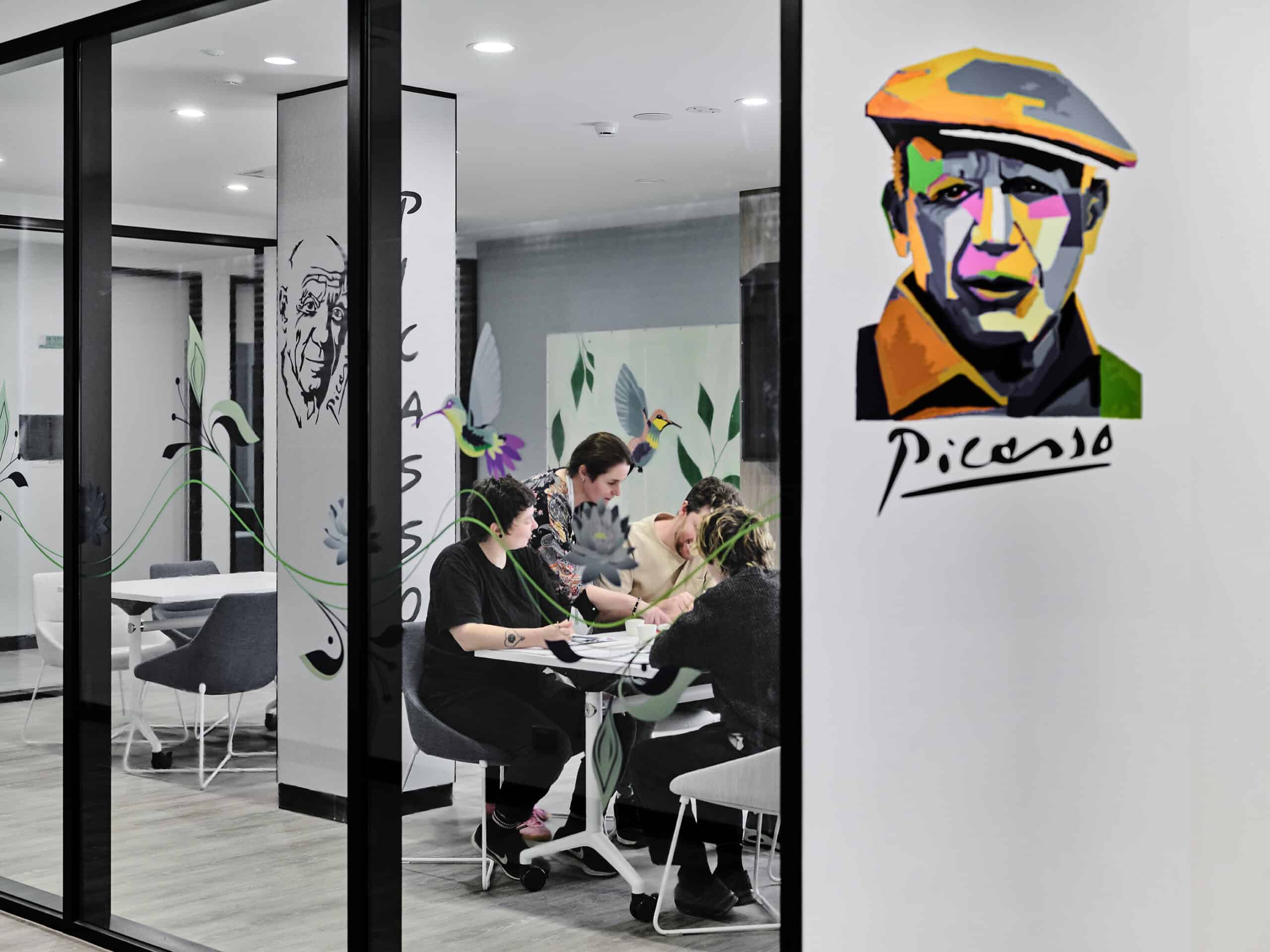
The Environment Matters
The treatment to support recovery from alcohol addiction is essential, but a purpose-built and well-appointed environment helps too. Our rehab facility is designed for comfort and calm. Private rooms, thoughtfully furnished communal areas, and access to landscaped outdoor spaces create a safe space for reflection, rest, and re connection — away from the noise and pressures of daily life.
Rooftop Garden

Common Questions about Alcohol Rehab
Recovery, Your Way
At Fullarton Clinic, our Addiction Recovery Program is structured, yet always patient-centred — with deep respect for the individual and their unique recovery journey. Treatment may include Cognitive Behaviour Therapy (CBT), Acceptance and Commitment Therapy (ACT), trauma-informed approaches, and — where appropriate — the option to connect with community supports such as SMART Recovery or Alcoholics Anonymous, if those pathways resonate with you.
Our focus is on delivering evidence-based care that meets you where you are, and supports you towards whatever comes next.
If you're ready to start exploring help for alcohol addiction in Melbourne, the first step is to speak with your GP and request a referral to Fullarton Clinic.
To access treatment under private health insurance, a referral to a Psychiatrist with admitting rights to Fullarton Clinic is required. Our Addiction Psychiatrist, Dr Shani Mallawaarachchi, can provide this support.
Contact Us
If you already have a referral, you're welcome to contact us through the form below — and our intake team will be in touch to guide you through the next steps.